- Quick stovetop meals packed with nutrients
- Fresh no-cook dinners for busy nights
- One-pan skillet dishes for easy cleanup
- Light and healthy protein-focused plates
- Simple make-ahead meals for the week
Stovetop meals get a bad reputation when they absolutely shouldn’t. If you can handle a pan, you can put a proper, nourishing dinner on the table in 20 minutes flat. No oven, no drama. And when you’re juggling work, kids’ homework, late training sessions, or exams, that kind of quick cooking can be the difference between grabbing takeout and actually fueling your body properly.
The trick is simple: build your plate around three things—lean protein, colorful veg, and smart carbs—and let the heat of the pan do the heavy lifting. That’s the backbone of most easy healthy dinner ideas that actually fit real life. Let’s walk through a few stovetop setups you can put on autopilot, even on the nights you’re running on fumes.
Think about a basic stir-fry. Done badly, it’s a soggy mess. Done right, it’s a weeknight weapon. You get high heat, crisp veg, juicy protein, and a sauce that’s actually lighter than anything from a bottle. Start with a splash of avocado or olive oil in a hot pan. Toss in aromatics—garlic, ginger, scallions—because flavor first, always. Then add thinly sliced chicken breast, tofu, or shrimp. You want everything bite-sized so it cooks in minutes, not half an hour. When that’s almost done, throw in a handful of quick-cooking veg: snap peas, bell peppers, baby spinach, shredded cabbage, or frozen mixed veggies straight from the bag. Finish with a simple sauce: low-sodium soy, a squeeze of lime, and a small spoon of honey or maple syrup. According to research, meals rich in vegetables and lean protein help with satiety and weight management, while limiting excess sodium and sugar supports long-term heart health [1]. This dish ticks all those boxes.
Now, if you’re coming home from training or a late shift, you want something fast that doesn’t feel heavy. A skillet grain bowl is perfect. Cook quick grains like quinoa, bulgur, or even microwave pouch brown rice on the side while you do everything else in one pan. In a large skillet, sauté onions, zucchini, and mushrooms with a pinch of salt and pepper. Add a can of drained chickpeas or black beans, plus a spoonful of cumin or smoked paprika. When it’s all hot and sizzling, spoon it over your grain, add a dollop of Greek yogurt, and maybe a sprinkle of feta or shredded cheese. Quinoa and beans together give you a solid dose of plant-based protein and fiber, which supports muscle recovery and steady energy for athletes and busy professionals alike [2]. It feels like comfort food, but it’s built for performance.
If you’ve got kids—or just a grown-up’s love of something cheesy—do a stovetop “mac and better.” Boil whole wheat or chickpea pasta while you make a quick sauce in another pan. Stir together a splash of milk, a handful of grated sharp cheddar, a spoonful of Greek yogurt, and some frozen peas or finely chopped broccoli. When the pasta is done, toss it straight into the sauce pan with a bit of the starchy pasta water. That water helps everything cling to the pasta without drowning it in cheese or cream. Compared with boxed mac and cheese, you’re boosting protein, fiber, and micronutrients, which can help stabilize blood sugar and keep everyone fuller longer [3]. It’s still cozy, still familiar, just grown-up enough to be proud of.
College students and young professionals, here’s one you can do in a cramped kitchen with one pan and almost no gear: skillet eggs with veggies. Heat a little oil, toss in any chopped veg you’ve got—onions, bell peppers, cherry tomatoes, spinach, even leftover roasted potatoes if you have them. Cook until soft, then make small wells and crack in a few eggs. Cover with a lid for a few minutes until the whites are set but the yolks are still soft. Eat straight from the pan with some whole grain toast or a tortilla. Eggs are high-quality protein with essential vitamins like B12 and choline, and combining them with vegetables boosts nutrient density without adding much time [4]. It’s breakfast for dinner, but upgraded and honestly perfect after a long day.
- Need something very fast? Keep pre-cooked grains (microwave pouches, leftover rice, or quinoa) in the fridge.
- Use frozen vegetables—nutritionally, they’re often as strong as fresh and sometimes even higher in vitamins because they’re frozen at peak ripeness [5].
- Stock simple flavors: garlic, lemon, soy sauce, dried herbs, chili flakes. They turn “random stuff in a pan” into a proper meal.
For families who are constantly on the move, set up a weekly stovetop pattern so you don’t have to think. Something like:
- Monday: Stir-fry night (change the protein and veg, keep the sauce simple).
- Wednesday: Skillet grain bowls (beans or tofu plus whatever veg is around).
- Friday: Egg or tofu skillet night (clean out the fridge, crack in eggs or toss in cubes of tofu).
This kind of loose framework keeps decision fatigue low and makes it easier to shop and prep. You’re not chasing new recipes every day; you’re rotating the same basic formula with different ingredients. It’s what restaurant kitchens do: same structure, different detail work.
If you’re into training or sport, build your stovetop plate like this: half the pan veggies, a quarter lean protein, a quarter carbs. Chicken, turkey, tofu, beans, or shrimp cook quickly and pair with almost anything. Add healthy fats—like a drizzle of olive oil or a few slices of avocado—right at the end. That combination of protein, complex carbs, and healthy fats supports muscle repair and steady energy better than a heavy, greasy takeaway [6].
And here’s the real mindset shift: stovetop cooking doesn’t need to be “perfect.” It just needs to be hot, safe, and balanced. Taste as you go. Add a splash more lemon, a pinch more salt, an extra handful of spinach. You’re allowed to improvise. Once you accept that, stovetop meals become the backbone of your week—fast, flexible, and genuinely good for you. Then, when the day’s chaos hits, you’ve got a pan, a plan, and dinner done before anyone has time to complain they’re hungry.
[1] Mozaffarian, D. et al. “Dietary and Policy Priorities for Cardiovascular Disease, Diabetes, and Obesity.” Circulation, 2016.
[2] Thomas, D. T. et al. “Position of the Academy of Nutrition and Dietetics, Dietitians of Canada, and the American College of Sports Medicine.” J Acad Nutr Diet, 2016.
[3] Ludwig, D. S. “The glycemic index: physiological mechanisms relating to obesity, diabetes, and cardiovascular disease.” JAMA, 2002.
[4] Ruxton, C. H. S. et al. “The nutritional properties and health benefits of eggs.” Nutr Food Sci, 2010.
[5] Bouzari, A. et al. “Vitamin retention in eight fruits and vegetables: a comparison of refrigerated and frozen storage.” J Agric Food Chem, 2015.
[6] Phillips, S. M. “Dietary protein for athletes: from requirements to optimum adaptation.” J Sports Sci, 2014.
Fresh no-cook dinners for busy nights
When you’re too tired to even turn on the stove, you still don’t have to default to ultra-processed snacks or delivery. You can pull together fully balanced, satisfying dinners straight from the fridge and pantry—no heat required. These are the kinds of options that make easy healthy dinner ideas actually doable on the nights you’d otherwise skip a proper meal.
“No‑cook dinners work best when you think in layers: base, protein, crunch, and a punchy sauce.”
Start with a base: leafy greens, shredded cabbage, cooked and cooled grains, or even canned beans that you quickly rinse. Then add a protein, some crunchy veg, and a flavorful dressing or dip. This basic structure keeps your meal satisfying while staying flexible enough for whatever you have on hand.
A classic example is a Mediterranean-inspired hummus plate. Spread a thick layer of hummus on a large dish, top with cherry tomatoes, cucumber slices, olives, canned chickpeas or lentils (rinsed), and a sprinkle of feta. Drizzle with olive oil and lemon, and serve with whole grain pita or crackers. A 2020 review in Nutrients found that Mediterranean-style eating patterns are linked with lower risk of cardiovascular disease and better weight management thanks to their emphasis on legumes, vegetables, and healthy fats like olive oil. You’re essentially getting that pattern in a five-minute, knife-only meal.
For something more protein-heavy, assemble a no-cook bean and tuna salad. Combine canned tuna (in water or olive oil), a can of white beans or chickpeas, chopped celery, red onion, and parsley. Dress with olive oil, lemon juice, salt, pepper, and a small spoonful of Dijon mustard. According to the American Heart Association’s 2023 guidance, eating fish like tuna or salmon two times a week is associated with reduced heart disease risk, largely because of omega‑3 fatty acids. Pair that with the fiber and plant protein from beans, and you get a filling, heart-friendly dinner with almost no effort.
“Combining canned fish with beans or lentils gives a high-protein meal that requires zero cooking and supports heart health.”
If you prefer something fresher and lighter, build a chopped salad “bar” right on your plate. Use pre-washed salad greens or shredded lettuce, then add:
– Pre-cut veggies (carrot matchsticks, cabbage mix, bell pepper strips)
– A ready protein like rotisserie chicken pulled from the bones, deli turkey slices, canned salmon, or firm tofu cubes
– A healthy fat such as avocado slices, nuts, or seeds
Top it with a simple dressing of olive oil, vinegar or lemon, and a pinch of salt. A 2022 analysis in the Journal of the Academy of Nutrition and Dietetics showed that people who regularly eat salads and raw vegetables tend to have higher intakes of key micronutrients like vitamin C, folate, and carotenoids, all associated with better long-term health. Using pre-washed and pre-cut ingredients trims your prep down to just assembly.
For plant-based nights, try a loaded lentil and veggie wrap. Use pre-cooked lentils (many stores sell them vacuum-packed), toss them with chopped tomatoes, cucumber, red onion, and a spoonful of store-bought pesto or vinaigrette. Spoon into whole wheat tortillas or collard leaves and add a smear of hummus or mashed avocado. Fiber-rich meals like this are linked to improved digestion and better blood sugar control; a 2019 meta-analysis in The Lancet reported that higher fiber intake (25–29 grams/day) is associated with reduced risk of heart disease, stroke, and type 2 diabetes.
“High‑fiber, no‑cook meals keep you full longer, support gut health, and can lower long‑term disease risk.”
If you’re craving something closer to comfort food, assemble a “snack board” dinner with intention, not just random munching. Use a large plate or cutting board and aim for:
– 1–2 proteins: boiled eggs (pre-cooked from the store), sliced cheese, hummus, smoked salmon, or sliced turkey
– 2–3 veggies: baby carrots, cucumbers, cherry tomatoes, sugar snap peas, radishes
– 1–2 high-fiber carbs: whole grain crackers, seed crackers, or leftover cooked grains served cold with olive oil and herbs
– Healthy fats: nuts, seeds, olives, or avocado
This approach is especially useful when you’re exhausted or feeding picky eaters. National survey data from the CDC shows that more than 85% of Americans fall short on vegetable intake; building veggies into this kind of “grazing” board encourages more produce without feeling like a traditional salad.
For nights when you want something with a bit more structure but still zero heat, try a cold noodle or grain bowl. Use pre-cooked soba, rice noodles, or leftover rice/grain from the fridge. Toss with shredded cabbage or coleslaw mix, edamame (thawed from frozen), grated carrot, and sliced cucumber. Make a quick sauce from soy sauce or tamari, lime or rice vinegar, and a little peanut or almond butter thinned with water. Research published in Nutrition Reviews in 2021 indicated that higher intake of soy foods and legumes, such as edamame, is associated with improved cholesterol profiles and reduced cardiovascular risk. This kind of bowl delivers that benefit in a chilled, refreshing way that’s perfect for hot evenings or post-workout dinners.
For those frequently getting home late, keep a “no-cook kit” stocked for emergencies:
– Canned beans, lentils, and chickpeas (low-sodium when possible)
– Canned fish (tuna, salmon, sardines) and pre-cooked lentils
– Shelf-stable whole grain crackers or wraps
– Jarred roasted red peppers, olives, and pickles for instant flavor
– Pre-washed salad greens and bagged slaw mixes in the fridge
– Hummus, Greek yogurt, and nut butters for quick sauces and dips
“If your fridge and pantry are set up with a basic no‑cook kit, five minutes of assembly is all you need for a balanced meal.”
These kinds of structured, no-cook plates are the safety net that keeps you from sliding into ultra-processed options when you’re tired. Recent data from a 2024 update to the National Health and Nutrition Examination Survey highlights that ultra-processed foods make up over half of the average American’s daily calories, and higher intake is consistently linked with greater risk of obesity and metabolic issues. Swapping even a few of those nights for simple, no‑cook combinations built around whole foods can make a noticeable difference in energy, digestion, and overall health, without adding to your workload on already hectic evenings.
One-pan skillet dishes for easy cleanup
Here’s where your inner minimalist gets to shine: one pan, one burner, and dinner that actually looks like you tried. One-pan skillet dishes are the sweet spot between “I cooked” and “I refuse to wash five different pots tonight.” For busy parents, residents stumbling in after a 12-hour shift, athletes walking in from training, and students with exactly one sad pan in a dorm kitchen, this style of cooking makes easy healthy dinner ideas feel realistic, not aspirational.
From a nutrition perspective, one-pan meals are underrated. When everything cooks together, you naturally end up combining protein, fiber-rich carbs, and veggies in one place—which is basically what every major guideline keeps preaching anyway. The 2020–2025 Dietary Guidelines for Americans emphasize building meals around vegetables, lean proteins, and whole grains, and a skillet is one of the simplest ways to pull that off without a lot of mental overhead. You’re not just saving dishes; you’re lowering the “barrier to entry” for eating well on weeknights.
To make this work consistently, use a simple formula: Protein + Veggie Pile + Smart Carb + Flavor Booster. Once you see it, you can riff on it endlessly for families, post-workout refuels, or late-night college study sessions.
Step 1: Choose a fast-cooking protein
For one-pan dinners, you want proteins that cook in 10–12 minutes or less, so everything can finish together. Think:
- Thinly sliced chicken or turkey breast
- Ground chicken, turkey, beef, or plant-based crumbles
- Shrimp or small fish fillets
- Firm or extra-firm tofu (cubed) or tempeh (sliced)
- Canned beans (rinsed) or lentils (pre-cooked)
Quick proteins aren’t just about speed; they’re about staying power. Higher-protein meals have been shown to improve satiety and help regulate appetite, which is huge if you’ve got kids asking for snacks all evening or you tend to graze after late meetings [1]. Aim for at least 20–30 grams of protein per adult portion if you’re training or very active—that’s roughly a chicken breast, a generous cup of beans, or a good block of tofu split between two people.
Step 2: Load the pan with vegetables
One of the easiest ways to eat more vegetables is simply… to put them in the same pan as everything else. The CDC keeps reminding us that most Americans don’t meet vegetable intake recommendations, and the gap is widest on busy weekdays [2]. A one-pan skillet quietly fixes that by making vegetables the default filler instead of extra starch.
Great skillet vegetables include:
- Bell peppers, onions, zucchini, mushrooms
- Cherry tomatoes, spinach, kale, shredded cabbage
- Frozen peas, mixed veg, broccoli, or green beans
- Pre-cut stir-fry mixes or slaw bags (zero shame in shortcuts)
Start with the firmer vegetables (onion, carrots, peppers, broccoli), then add quick-cooking ones (spinach, tomatoes, peas) near the end. This layering keeps texture and color, which makes the whole dish more satisfying. Color diversity isn’t just pretty—diets rich in a variety of plant colors are associated with better overall nutrient intake and long-term disease risk reduction [3]. Translation: more colors in the pan, better insurance policy for your health.
Step 3: Add a “smart carb” that actually works for your life
Carbs in a one-pan dish aren’t the enemy; they’re the fuel—especially for athletes, active kids, and anyone who’s been on their feet all day. The key is choosing carbs that bring fiber and nutrients to the party instead of just calories.
Good one-pan carb options:
- Pre-cooked brown rice or quinoa (store-bought pouches or leftovers)
- Canned potatoes or parboiled baby potatoes (halved)
- Whole wheat or legume-based pasta (boiled ahead, then tossed in)
- Whole grain farro, barley, or bulgur (cooked in batches earlier in the week)
For true “dump and done” nights, use grains you cooked earlier or microwave pouches. There’s solid evidence that higher whole grain intake is linked to lower risk of type 2 diabetes and heart disease [4], so swapping out white rice or plain pasta a couple nights a week adds up over time—without you having to become a meal prep influencer.
Step 4: Bring it to life with a simple flavor profile
Skillets fall apart when they’re bland. The good news is, you don’t need a complicated sauce—just pick a flavor lane and commit:
- Mediterranean: Olive oil, garlic, oregano, lemon, cherry tomatoes, olives, feta
- Tex-Mex: Cumin, chili powder, paprika, lime, corn, black beans, cilantro
- Asian-inspired: Garlic, ginger, low-sodium soy or tamari, sesame oil, green onions
- Comfort-style: Onion, thyme, a splash of broth, a little cheese, and plenty of black pepper
Having two or three “default” flavor sets like this cuts decision fatigue. You’re no longer asking, “What should I cook?” You’re asking, “Is tonight more Tex-Mex or Mediterranean?”—a much easier question when your brain is fried.
Blueprint #1: 15-minute Mediterranean chickpea and veggie skillet
This one hits everyone’s needs: cheap enough for students, plant-based for meatless nights, and hearty enough for post-practice dinners.
- Sauté sliced onion and bell pepper in olive oil until tender.
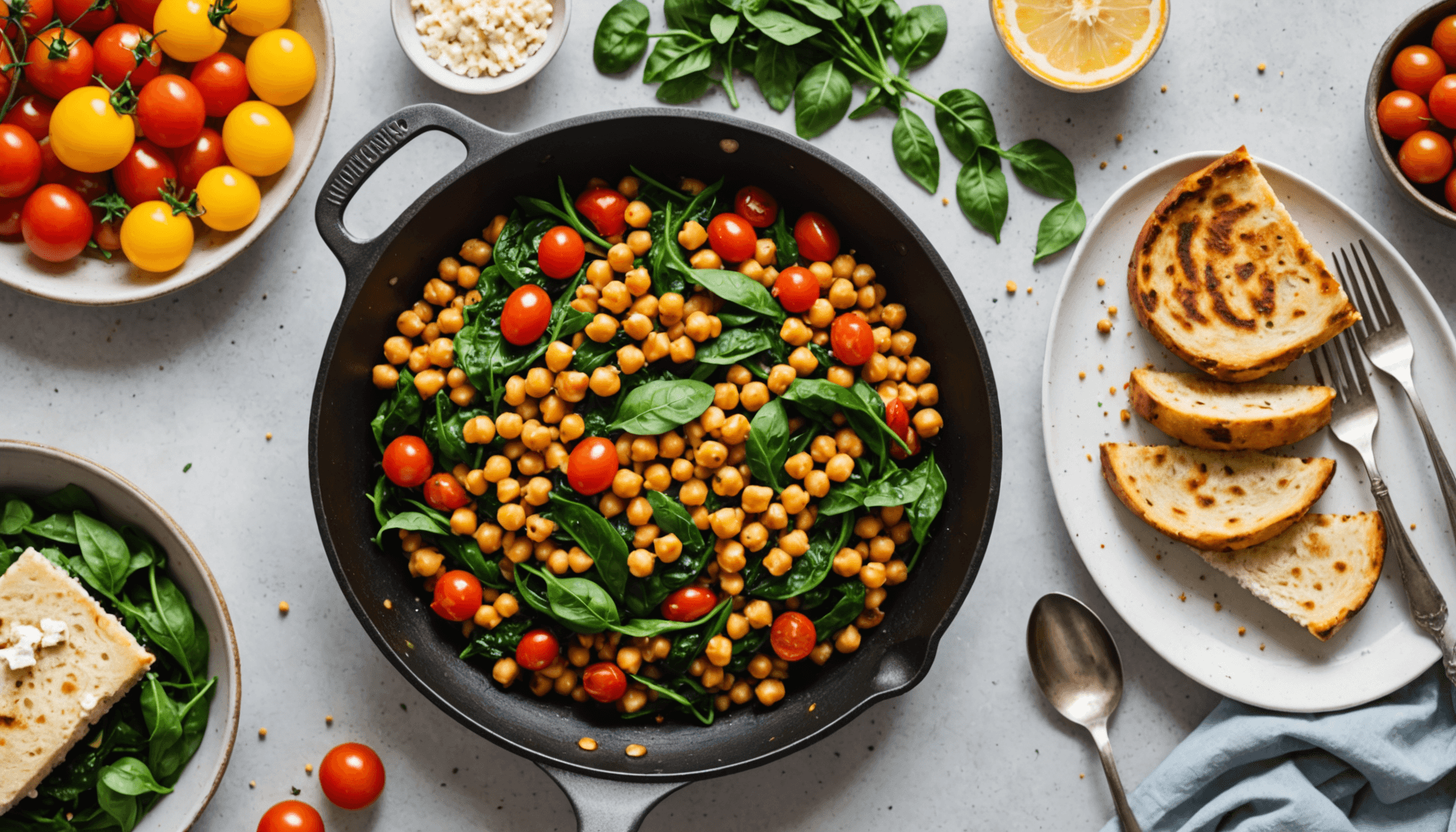
- Add a can of chickpeas (rinsed), cherry tomatoes, and a handful of spinach.
- Season with garlic, oregano, salt, pepper, and a squeeze of lemon.
- Finish with crumbled feta and another drizzle of olive oil.
Serve over pre-cooked quinoa or brown rice. Between the chickpeas and quinoa, you’re getting a complete set of essential amino acids plus fiber to help stabilize blood sugar and support gut health [5]. For athletes, this combo works well as a lighter post-training dinner: enough carbs to refill energy stores, enough protein to help with muscle repair, without feeling heavy.
Blueprint #2: One-pan Tex-Mex chicken and black bean skillet
This is a family favorite because it tastes like nachos but eats like a balanced meal.
- Brown thinly sliced chicken breast (or turkey) in a large skillet with a little oil.
- Add diced onion and bell pepper; cook until softened.
- Stir in canned black beans (rinsed), frozen corn, cumin, chili powder, and smoked paprika.
- Finish with lime juice, a small handful of shredded cheese, and chopped cilantro.
Scoop it into bowls with a base of brown rice or on top of crisp lettuce. A small dollop of Greek yogurt on top gives you a creamy finish plus extra protein and calcium. Fiber-rich beans combined with lean poultry create a high-protein, high-fiber meal pattern associated with better appetite regulation and improved cardiometabolic health [1,6]. Kids see “taco bowl”; your body sees stable energy instead of a post-dinner crash.
Blueprint #3: Shrimp, garlic, and greens skillet for late nights
If you’re walking in at 9 p.m. after the gym or a late shift, you need food that’s fast but not a gut bomb. Shrimp and greens are your friend.
- Sauté garlic in olive oil over medium heat.
- Add peeled shrimp; cook just until they start to turn pink.
- Toss in cherry tomatoes and a huge handful of baby spinach or kale.
- Season with salt, pepper, lemon zest, and a pinch of red pepper flakes.
Serve over pre-cooked farro, quinoa, or even canned white beans warmed briefly in the same pan. Shrimp are high in protein and low in calories, and pairing them with whole grains or beans gives you a more complete nutrient profile—with fiber, magnesium, and iron in the mix [4,7]. This is the type of “quick cooking” that supports muscle recovery without leaving you too full to sleep.
Blueprint #4: Beef (or lentil) and veggie “unstuffed peppers” skillet
This is a cozy, comfort-food style dinner that skips the baking dish entirely.
- Brown lean ground beef or turkey (or use cooked lentils for a plant-based version) with diced onion and garlic.
- Add chopped bell peppers, canned diced tomatoes, and Italian seasoning.
- Stir in pre-cooked brown rice or cauliflower rice.
- Finish with a small sprinkle of cheese or nutritional yeast and fresh parsley.
You get all the same flavors of stuffed peppers but in 20 minutes and one pan. Using leaner meat and plenty of vegetables keeps saturated fat down and fiber up—both key strategies in heart-healthy eating patterns [8]. For kids and pickier eaters, the “deconstructed” style tends to be less intimidating than full stuffed peppers on a plate.
Blueprint #5: College-student tofu and noodle skillet
For anyone cooking in a tiny kitchen with minimal gear, this hits that sweet spot of cheap, fast, and legitimately good for you.
- Pan-fry cubed firm tofu in a little oil until golden on most sides.
- Add a bag of frozen mixed vegetables straight to the pan.
- Stir in pre-cooked whole wheat or rice noodles.
- Toss with a quick sauce: soy or tamari, a spoonful of peanut butter, a little water, and a drizzle of honey or maple syrup.
The tofu brings complete plant protein; the vegetables bring fiber and micronutrients; the noodles bring carbohydrates for brain fuel during late-night study. Research suggests that soy-based proteins like tofu can support heart health when they replace more processed or high-saturated-fat meats [7]. You’re basically building a balanced bowl in one skillet, with ingredients you can store for weeks.
How to scale one-pan meals for families and meal prep
If you’re feeding multiple people—or future you—think in terms of “base now, variations later.” Cook a big neutral skillet base, then customize at the table.
- Make a big base: Protein + onions + peppers + a grain.
- Customize per person: One kid adds cheese, another adds salsa, you add extra chili flakes and avocado.
- Pack leftovers: Portion into containers with a wedge of lemon or a small container of sauce to freshen it up the next day.
From a practical standpoint, this reduces both food waste and friction. Instead of separate meals for everyone, you’ve got one core recipe with multiple “finishes.” This style lines up with evidence that flexible, family-style eating can support better dietary variety and less stress around food for both parents and kids [9].
Make cleanup even more painless
The whole point of one-pan cooking is less chaos. A few low-effort habits make a surprising difference:
- Use a large nonstick or well-seasoned skillet so you can cook at higher heat with less sticking.
- Deglaze with a splash of broth, water, or wine at the end—this lifts stuck bits and instantly becomes a light sauce.
- Wipe the pan out right after dinner; it’s always easier when food hasn’t dried on yet.
- Keep a “skillet bin” in the fridge: chopped onions, peppers, carrots, and greens ready to throw in.
That last one is particularly powerful for busy weeks. If you spend 10–15 minutes once or twice a week chopping a few vegetables, you’ve basically prepaid for faster dinners each night. Behavior research around cooking habits shows that reducing “activation energy”—the steps required to get started—significantly increases the chance you’ll cook versus order in [10]. Prepped veg in the fridge is exactly that kind of nudge.
And this is the bigger win with one-pan skillet cooking: it’s not just about saving time tonight. It’s about creating a frictionless pattern you can repeat over and over—on school nights, between meetings, after training—that quietly shifts your baseline toward better nutrition. With a single skillet, a short list of ingredients, and a few repeatable blueprints, you’ve got a system that makes healthy weeknight dinners the path of least resistance, not the exception.
[1] Wycherley, T. P. et al. “Effects of energy-restricted high-protein, low-fat compared with standard-protein, low-fat diets.” Am J Clin Nutr, 2012.
[2] Centers for Disease Control and Prevention. “Adults Meeting Fruit and Vegetable Intake Recommendations — United States, 2019.”
[3] Liu, R. H. “Health-promoting components of fruits and vegetables in the diet.” Adv Nutr, 2013.
[4] Aune, D. et al. “Whole grain consumption and risk of cardiovascular disease, cancer, and all cause and cause specific mortality.” BMJ, 2016.
[5] Afshin, A. et al. “Health effects of dietary risks in 195 countries, 1990–2017.” Lancet, 2019.
[6] Papanikolaou, Y. & Fulgoni, V. L. “Bean consumption is associated with greater nutrient intake.” Nutr J, 2008.
[7] Messina, M. “Soy and health update: evaluation of the clinical and epidemiologic literature.” Nutrients, 2016.
[8] Sacks, F. M. et al. “Dietary fats and cardiovascular disease: a presidential advisory from the American Heart Association.” Circulation, 2017.
[9] Berge, J. M. & Everts, J. C. “Family-based interventions targeting childhood obesity: a meta-analysis.” Child Obes, 2011.
[10] Reicks, M. et al. “Impact of Cooking and Home Food Preparation Interventions Among Adults.” J Nutr Educ Behav, 2014.
Light and healthy protein-focused plates
When you build a plate around lean protein, the whole meal tends to feel lighter but still satisfying—exactly what you want on nights when heavy, carb-loaded dishes sound like too much. These kinds of plates are especially helpful for anyone looking to support muscle recovery, manage weight, or simply avoid the post-dinner slump. They also fit perfectly into a rotation of easy healthy dinner ideas because they come together with simple ingredients and basic techniques.
“Protein-focused meals don’t have to be huge portions of meat; pairing moderate protein with plenty of vegetables and healthy fats is often more balanced and sustainable.”
Below are step-by-step, protein-centered plates you can put on repeat. Mix and match them through the week depending on your schedule and energy needs.
-
Citrus herb chicken with skillet green beans
This is a light, bright plate that works just as well for a post-workout dinner as it does for a quick weeknight family meal.
- Prep the chicken
- Slice boneless, skinless chicken breasts in half horizontally so they cook faster.
- In a bowl, combine:
- Juice of 1 lemon (or lime)
- 1–2 tablespoons olive oil
- 1–2 cloves minced garlic
- 1 teaspoon dried oregano or Italian seasoning
- Salt and pepper to taste
- Add the chicken to the bowl, toss to coat, and let it marinate while you prep the vegetables (even 10 minutes helps).
- Cook the green beans
- Heat a large skillet over medium heat and add a small drizzle of olive oil.
- Add trimmed fresh or thawed frozen green beans.
- Season lightly with salt and pepper.
- Cook, stirring occasionally, for 6–8 minutes, until crisp-tender and slightly blistered.
- Transfer to a plate and keep warm.
- Cook the chicken
- In the same skillet, add the marinated chicken pieces in a single layer.
- Cook 4–5 minutes per side, until golden and cooked through (juices run clear and internal temperature reaches 165°F).
- In the last minute, squeeze extra lemon over the top and sprinkle with chopped parsley if you have it.
- Plate it light
- Slice the chicken and serve over a bed of green beans.
- Add a small side of pre-cooked quinoa, farro, or a slice of whole grain bread if you’d like some complex carbs.
- Finish with an extra drizzle of olive oil and a grind of black pepper.
This plate gives a generous amount of high-quality protein from chicken with plenty of fiber and micronutrients from the green beans. Keeping the carb portion modest and focusing on vegetables helps you feel energized rather than weighed down, which is ideal for evenings when you still have studying, emails, or recovery work to do.
- Prep the chicken
-
Pan-seared salmon with cucumber-yogurt salad
This combination feels fresh and restaurant-worthy while staying simple enough for busy nights. It’s perfect when you want something light but rich in heart-healthy fats.
- Make the quick salad
- In a bowl, combine:
- 1 cup plain Greek yogurt
- 1 small cucumber, thinly sliced or diced
- 2 tablespoons chopped fresh dill or mint (or 1 teaspoon dried)
- Juice of half a lemon
- Salt and pepper to taste
- Stir and set in the fridge while you cook the salmon so the flavors meld.
- In a bowl, combine:
- Season the salmon
- Pat salmon fillets dry with paper towels.
- Rub lightly with olive oil.
- Season with salt, pepper, and a pinch of garlic powder or paprika.
- Cook on the stovetop
- Heat a nonstick or well-oiled skillet over medium-high heat.
- Place salmon skin-side down (if it has skin).
- Cook 4–5 minutes, then flip carefully.
- Cook another 3–4 minutes, until the flesh flakes easily with a fork.
- Assemble the plate
- Add a generous scoop of the cucumber-yogurt mixture to each plate.
- Top or serve alongside the salmon fillet.
- Round out the meal with a handful of cherry tomatoes or a small side salad for extra color and fiber.
Between the salmon and Greek yogurt, this dish provides a powerful combo of protein and omega-3 fats while keeping sugars and refined carbs low. It’s particularly useful as a recovery meal after training sessions thanks to the high-quality protein and anti-inflammatory fats.
- Make the quick salad
-
Lean turkey lettuce cups with crunchy veggies
If you’re craving something that feels like takeout but lighter, lettuce cups hit that sweet spot. They deliver a lot of flavor, crunch, and protein with minimal heaviness.
- Prep the base
- Separate and wash large lettuce leaves (butter, romaine, or iceberg work well); pat dry.
- Set aside on a plate or tray to use as “shells.”
- Cook the turkey
- Heat a teaspoon or two of oil in a skillet over medium-high heat.
- Add 1 pound lean ground turkey (or chicken).
- Break it up with a spatula as it browns.
- Season with:
- 2 cloves minced garlic
- 1 teaspoon grated ginger (optional but great for flavor)
- 2–3 tablespoons low-sodium soy sauce or tamari
- 1 teaspoon honey or maple syrup
- A splash of lime juice
- Cook until no pink remains and the mixture is slightly glossy.
- Add vegetables for crunch
- Stir in finely chopped carrots, bell peppers, or water chestnuts.
- Cook for another 2–3 minutes until just tender.
- Taste and adjust seasoning with more lime or soy if needed.
- Build the cups
- Place a spoonful or two of the turkey mixture into each lettuce leaf.
- Top with sliced green onions, shredded cabbage, or a few crushed peanuts for extra texture.
- Serve immediately so the lettuce stays crisp.
This meal keeps the focus on protein and vegetables, with lettuce standing in for tortillas or buns. It’s also easy to customize: add cooked lentils or finely chopped mushrooms to stretch the turkey and sneak in more plants, or use crumbled extra-firm tofu instead of meat for a plant-based version.
- Prep the base
-
Egg and veggie power plate
Eggs are one of the most convenient, budget-friendly proteins, and they work beautifully for light dinners, not just breakfast. This plate is ideal when you want something fast, balanced, and not too heavy before bed.
- Sauté the vegetables
- Heat a teaspoon of olive oil in a skillet over medium heat.
- Add a mix of chopped vegetables such as:
- Spinach or kale
- Cherry tomatoes
- Mushrooms
- Onion or bell pepper
- Season with a pinch of salt, pepper, and dried herbs.
- Cook 5–7 minutes, until the vegetables soften and excess moisture cooks off.
- Cook the eggs
- Push the vegetables to one side of the pan.
- Lightly oil the empty side if needed.
- Crack 2–3 eggs into the skillet (per person), or whisk them in a bowl first for a scramble.
- Cook to your preferred doneness:
- Sunny-side or over-easy for runny yolks that coat the vegetables.
- Soft scramble if you like small curds mixed with the veggies.
- Assemble and finish
- Slide the eggs and vegetables onto a plate.
- Add a few slices of avocado or a spoonful of hummus on the side for healthy fat.
- If you want a small amount of carbs, include half a whole grain pita, a slice of whole wheat toast, or a few spoonfuls of leftover brown rice.
This plate is high in protein and micronutrients but gentle on digestion, making it a good option for later dinners. It also fits well into a routine of stovetop meals and quick cooking, using items many people already keep on hand.
- Sauté the vegetables
-
High-protein bean and veggie bowl with tahini drizzle
For plant-focused nights, beans make it easy to keep protein high while skipping meat. This bowl is built around pantry staples and fresh or frozen vegetables.
- Warm the beans
- In a skillet, add:
- 1 can of chickpeas, black beans, or white beans (rinsed and drained)
- A splash of water or low-sodium vegetable broth
- 1 clove minced garlic
- 1 teaspoon cumin or smoked paprika
- Heat over medium, stirring often, until hot and lightly fragrant (about 5 minutes).
- In a skillet, add:
- Cook or quickly steam vegetables
- Add quick-cooking vegetables directly to the skillet:
- Frozen peas or mixed vegetables
- Baby spinach or chopped kale
- Thinly sliced bell peppers or shredded carrots
- Cook another 3–5 minutes, until vegetables are tender-crisp.
- Add quick-cooking vegetables directly to the skillet:
- Make the tahini drizzle
- In a small bowl, whisk together:
- 2 tablespoons tahini
- Juice of half a lemon
- 1–2 tablespoons water (to thin)
- Salt, pepper, and a pinch of cumin or chili flakes
- Adjust the water until you get a pourable consistency.
- In a small bowl, whisk together:
- Build the bowl
- Spoon the warm beans and vegetables into a shallow bowl.
- Drizzle generously with the tahini sauce.
- Top with chopped parsley, cilantro, or green onions if available.
- Optionally add a small scoop of cooked quinoa or brown rice if you want extra staying power.
This dish delivers substantial plant protein and fiber from beans and tahini while keeping overall calories reasonable. It’s satisfying without feeling heavy, and it’s built entirely from ingredients that store well, making it an excellent backup option when you haven’t planned ahead but still want something aligned with easy healthy dinner ideas.
- Warm the beans
Simple make-ahead meals for the week
 Batch-cooking even a few components early in the week can radically simplify your evenings. Instead of asking, “What on earth am I going to make?” you’re asking, “How do I want to combine what’s already cooked?” That small shift—toward deliberate, simple make-ahead meals—keeps your week aligned with easy healthy dinner ideas even when your schedule is unpredictable.
A good starting point is choosing 2–3 anchor proteins you can prepare without an oven. Think simmered lentils, stovetop chicken, or a big pot of beans. For example, cook a batch of lentils (or use pre-cooked ones), then divide them into containers: one becomes taco-style lentils with chili powder and cumin, another gets tossed with olive oil, lemon, and herbs for salads, and a third is mashed with a little yogurt or tahini for quick wraps. Research on meal patterns consistently shows that having ready-to-eat protein on hand is linked with better diet quality and less reliance on ultra-processed foods during the week, simply because it lowers the effort required to make a balanced plate when you’re tired.
Stovetop meals are perfect for cooking a big batch of versatile chicken, tofu, or tempeh in one go. Sear sliced chicken breasts or tofu cubes in a large skillet with salt, pepper, garlic, and a neutral seasoning (like Italian herbs or paprika). Once cooked, cool and refrigerate in a sealed container. During the week, that simple protein can become: a quick stir-fry with frozen vegetables, a protein boost for salads or grain bowls, or a filling for lettuce cups and tacos. Because you started with a neutral flavor, you can change the sauce each night—soy-ginger one day, tomato-basil the next—without feeling like you’re eating the same meal on repeat.
Carbs are another piece you can prep once and forget. Cooking a big pot of brown rice, quinoa, barley, or whole wheat pasta on a Sunday becomes the backbone of multiple no bake dinners and low-effort plates. Store grains in the fridge and reheat in a skillet with a splash of water or broth when needed. You might turn them into a veggie-packed fried rice, a Mediterranean bowl with chickpeas and olives, or a warm grain salad tossed with beans and leftover roasted or steamed vegetables. Studies on whole grain intake suggest that making them a default part of your meals—rather than an occasional addition—supports healthier blood sugar responses and cardiovascular health over time.
Vegetables are often the part that falls apart on busy weeks, but a little planning goes a long way. Spend 20–30 minutes washing and chopping a few high-use vegetables—like carrots, bell peppers, cucumbers, and leafy greens—and store them in clear containers where you can see them. You don’t have to prep everything; even pre-washed salad greens and a bag of shredded cabbage or coleslaw mix give you a head start. During the week, these ready veggies become instant sides for protein-focused plates, add crunch to wraps and tacos, or bulk up soups and skillet dishes. People who prep vegetables in advance are more likely to meet daily produce recommendations, not because they’re more disciplined, but because they’ve removed a step between “hungry” and “healthy.”
To pull everything together, think in terms of “meal building blocks” instead of full recipes. One block is a protein (beans, chicken, tofu, eggs), one is a carb (grains, potatoes, whole grain pasta), one is a vegetable or two, and one is a flavor booster (sauce, herbs, seeds). When these live in your fridge, mixing and matching becomes almost automatic:
– Cooked quinoa + black beans + pre-cut bell peppers + salsa and avocado = taco bowl
– Brown rice + sautéed frozen mixed vegetables + cubed tofu + soy-ginger sauce = quick stir-fry
– Lentils + chopped cucumbers and tomatoes + olive oil and lemon + feta = Mediterranean-style salad
Each combination takes minutes, not hours, yet you’re still lining up with the core of easy healthy dinner ideas: whole foods, balanced macros, and lots of color.
A powerful strategy is to dedicate one short “prep session” per week, even just 45–60 minutes. During that time, you might cook one pot of grains, one batch of beans or lentils, one or two proteins, and wash or chop a few vegetables. You’re not cooking full meals; you’re stocking your “food toolbox.” Behavioral research on home cooking suggests that when healthy options are visible and ready, people naturally reach for them more often, even if they don’t consider themselves “disciplined.” Ask yourself: what would happen if, instead of prepping elaborate recipes, you simply made it easier for your future self to assemble something nourishing in five minutes?
Sauces and dressings are tiny investments that transform leftovers into fresh-tasting dinners. Whisk a simple vinaigrette (olive oil, vinegar or lemon, mustard, salt, pepper) and store it in a jar for the week. Make a yogurt-based sauce with garlic and herbs, or a tahini-lemon drizzle, or a peanut-lime sauce. Those flavor boosters can turn plain beans and rice into a bowl you look forward to, transform leftover chicken into a new wrap, or breathe life into another night of chopped vegetables. This is where your curiosity can lead you: how many ways can you dress the same core ingredients so they taste completely different?
Portioning is another underused tool. Instead of storing a giant container of food that you’ll pick at, divide meals into individual containers. For example, assemble four or five “grab-and-heat” bowls: each with a scoop of grain, a protein serving, and some vegetables. Keep any delicate toppings—sauces, fresh herbs, nuts—on the side so they stay fresh. On hectic nights, you’re not making decisions; you’re just choosing which color bowl to reheat. Some studies link this kind of portioned meal prep with better calorie awareness and less impulsive snacking, not through restriction, but through clarity and convenience.
If you’re an athlete, student, or working long shifts, you can tailor your make-ahead meals to your schedule. On training days, lean into higher carb bowls with extra grains or potatoes to support performance and recovery. On lighter activity days or evenings when you want something less heavy, use the same proteins but pair them with extra vegetables and fewer starches. The flexibility comes from the components: the same batch of chicken or beans can serve very different plates depending on how you assemble them. That kind of responsive eating—listening to both your schedule and your body—can help you develop a more intuitive, sustainable relationship with food.
Consider also the emotional side of coming home to something ready. When you open the fridge and see colorful containers, you’re seeing proof that your earlier self cared enough to make things easier. That feeling can nudge you away from defaulting to ultra-processed options. Over time, you might notice that your definition of “normal” dinner shifts: instead of assuming it must be complicated or time-consuming, you start to view dinner as a simple act of combining building blocks. What might change in your week if that became your baseline?
Finally, treat these make-ahead habits as experiments, not rules. Try prepping just one thing this week—maybe a pot of grains or a batch of beans—and pay attention to how often you reach for it. Notice what actually gets eaten and what doesn’t. Ask yourself what would make it even easier next time: smaller containers, different flavors, more vegetables, less? The more curious you are about your own patterns, the more you’ll refine a system that fits your real life, not some idealized version of it. In that ongoing experiment, each batch of simple, make-ahead food becomes more than dinner—it becomes data about what helps you nourish yourself with less friction and more intention.
- How can I plan a week of easy healthy dinners without using an oven?
- Start by choosing 2–3 proteins, 1–2 grains, and a few vegetables you’ll prep on the stovetop or with no-cook methods. Cook those in batches, then mix and match them through the week with different sauces or spices so each meal feels new. This approach gives you structure without locking you into rigid recipes.
- Is it safe to meal prep chicken, fish, or tofu for several days?
- Yes, as long as you cook them thoroughly, cool them quickly, and store them in the fridge in airtight containers. Most cooked proteins are safe for 3–4 days when refrigerated at or below 40°F. If you’re prepping for longer than that, freeze portions and thaw them in the fridge as needed.
- How do I keep make-ahead meals from getting boring by midweek?
- Use neutral base ingredients and change the flavor with sauces, herbs, and toppings. For example, the same lentils can be Mexican-inspired with salsa and avocado one night and Mediterranean with olive oil, lemon, and herbs the next. Rotating flavor profiles keeps your palate interested without more cooking time.
- What are some good no-bake or no-oven dinners for very hot or busy days?
- Try hearty salads with canned beans or tuna, hummus and veggie plates, lentil or grain wraps, and “snack board” dinners built around cheese, eggs, vegetables, and whole grain crackers. These options rely on assembly rather than heat, yet still offer protein, fiber, and healthy fats. Think of them as structured, balanced grazing rather than random snacking.
- How can I make sure my make-ahead meals are actually balanced and filling?
- Aim for a simple template: half your container vegetables, one-quarter protein, and one-quarter whole grains or starchy vegetables, plus a small amount of healthy fat. This pattern tends to support steady energy and satiety. If you’re often hungry soon after eating, consider adding a bit more protein, fiber, or fat.
- Are microwave pouches of grains and frozen vegetables really healthy?
- Generally, yes—plain microwaveable grains and frozen vegetables are minimally processed and often just as nutritious as freshly cooked versions. Look for options without added sauces, sodium, or sugar, and flavor them yourself with herbs, spices, and healthy fats. Using these shortcuts can make quick cooking more realistic on busy nights.
- What if I don’t like eating the same thing day after day?
- Instead of prepping full meals, prep components: plain grains, basic proteins, and a variety of vegetables. Then assemble different combinations each night—grain bowls, wraps, salads, or skillet mixes—using the same building blocks. This method gives you variety in form and flavor while still saving time and effort.

Leave a Reply