Calorie count
Calorie Calculator for Meal Planning
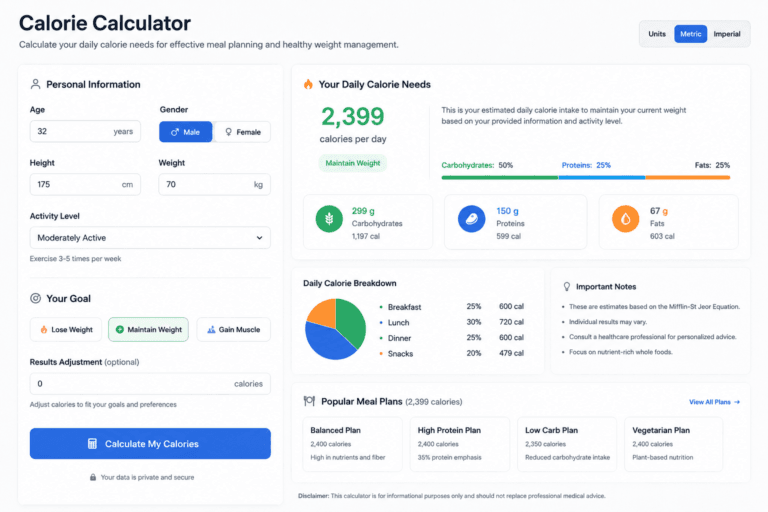
A calorie calculator for meal planning can simplify your journey toward healthier eating. It helps you understand how many calories you need to consume daily based on your personal goals, whether it’s weight loss, maintenance, or gain. This article will guide you through meal planning strategies that fit into a busy lifestyle while ensuring you meet your nutritional needs.
Meal Planning Strategies
Effective meal planning starts with understanding your dietary preferences and goals. Here are some practical strategies to consider:
- Set Clear Goals: Determine whether you’re aiming to lose weight, maintain weight, or build muscle. Each goal requires different calorie intakes.
- Use a Calorie Calculator: Input your age, gender, weight, height, and activity level into a calorie calculator to find your daily needs. For example, a 30-year-old woman weighing 150 pounds who exercises moderately may require around 2,000 calories per day [Source: USDA].
- Create Balanced Meals: Aim for meals that combine protein (like chicken or beans), vegetables (such as spinach or carrots), and whole grains (like brown rice or quinoa). This formula ensures you’re not only hitting your calorie targets but also getting essential nutrients.
Nutrition Guidelines
Understanding nutrition guidelines is crucial for effective meal planning:
- Daily Caloric Needs: Most adults need between 1,800 to 2,400 calories daily depending on their activity levels [Source: USDA].
- Macronutrient Distribution: A balanced diet typically consists of:
- 45-65% carbohydrates
- 20-35% fats
- 10-35% protein
This distribution helps maintain energy levels and supports overall health.
Healthy Recipes
Incorporating healthy recipes into your meal plan can make cooking enjoyable and stress-free. Here are three quick options:
- One-Pan Chicken and Veggies:
- Ingredients: Chicken breast, bell peppers, zucchini.
- Directions: Season chicken with olive oil and spices; roast with veggies at 400°F for about 25 minutes.
- Quinoa Salad:
- Ingredients: Quinoa, cherry tomatoes, cucumber.
- Directions: Cook quinoa according to package instructions; mix in chopped vegetables and lemon juice.
- Stir-Fried Tofu with Broccoli:
- Ingredients: Tofu, broccoli florets, soy sauce.
- Directions: Sauté tofu until golden; add broccoli and cook until tender.
These recipes are nutritious and can be prepared quickly during busy weekdays.
Dietary Preferences
Meal planning should cater to individual dietary preferences—be it vegetarianism, gluten-free diets, or others:
- For vegetarians or vegans, focus on plant-based proteins such as lentils and chickpeas.
- Gluten-free options can include quinoa instead of traditional pasta.
Customizing meals according to these preferences ensures satisfaction while meeting caloric needs.
Portion Sizes
Portion control is vital in managing caloric intake effectively:
- Use measuring cups or a food scale initially until you get familiar with portion sizes.
- A general guideline is one serving of protein should be about the size of your palm; grains should fill about a quarter of the plate; vegetables should take up half.
Tracking portion sizes helps prevent overeating while sticking to calorie goals.
How Does a Calorie Calculator Work?
A calorie calculator works by estimating the number of calories you burn through basic metabolic functions (BMR) plus additional calories burned through physical activities (TDEE). By inputting personal data like age and activity level into the calculator:
- It calculates BMR using formulas like the Harris-Benedict equation.
- It multiplies BMR by an activity factor based on lifestyle choices—sedentary to very active—to provide total daily energy expenditure (TDEE).
This number serves as a benchmark for how many calories you should consume each day based on your goals.
What Are the Benefits of Meal Planning?
Meal planning offers several advantages:
- Saves Time: Preparing meals in advance reduces daily cooking time.
- Reduces Stress: Knowing what you’ll eat removes decision fatigue during hectic days.
- Promotes Healthier Choices: Pre-planned meals encourage healthier eating habits over impulse decisions when hungry.
By utilizing tools like a calorie calculator within this framework allows for more structured eating habits tailored specifically to individual needs.
Can I Customize My Meal Plan?
Absolutely! Customizing your meal plan involves adjusting recipes based on personal tastes or dietary restrictions while keeping an eye on caloric intake:
- Identify favorite foods that fit within nutritional guidelines.
- Swap out ingredients in recipes without compromising flavor—use Greek yogurt instead of sour cream or zoodles instead of pasta.
- Adjust portion sizes based on hunger levels while remaining mindful of overall caloric consumption.
Flexibility in meal plans leads to sustainable changes rather than restrictive dieting practices.
How To Track Calories Effectively?
Tracking calories can be straightforward if approached systematically:
- Use apps like MyFitnessPal or Cronometer that allow easy logging of food items along with their caloric values [Source].
- Keep a journal where you jot down everything consumed throughout the day—this reinforces accountability.
- Review weekly progress against goals; adjust intake if needed based on results observed over time.
Consistency is key here—commitment over weeks will yield better insights into eating patterns and help refine future meal plans accordingly.
Next Steps
Now that you’ve learned about using a calorie calculator for meal planning effectively:
- Start by identifying your caloric needs using an online calculator today.
- Create at least one week’s worth of balanced meals focusing on simplicity and nutrition.
- Monitor portions carefully as you begin tracking what you eat over the next few weeks—this will help develop lasting habits without feeling overwhelmed by rigid rules.
By taking these steps now towards structured meal preparation aligned with caloric awareness leads ultimately toward improved health outcomes over time!